
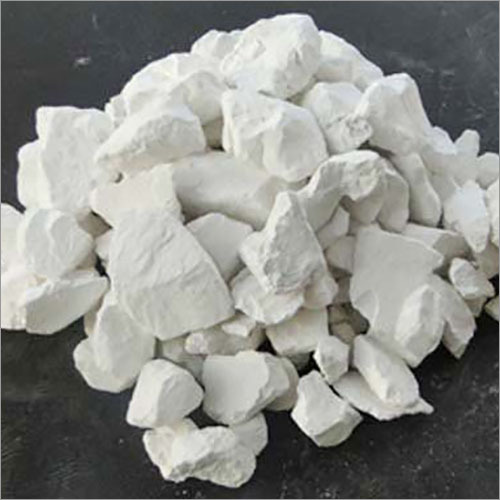
Calcined Lime, chemically known as Calcium Oxide (CaO), is produced through the thermal decomposition of calcium carbonate (CaCO₃), commonly found in limestone and seashells. This manufacturing process, known as calcination, involves heating limestone in a lime kiln to temperatures typically above 900°C. At this stage, carbon dioxide (CO₂) is released, leaving behind calcium oxide.
The chemical reaction is represented as:
CaCO₃ (s) → CaO (s) + CO₂ (g)
This reaction, often referred to as lime-burning, is one of the earliest chemical processes known to human civilization.
Calcined Lime, also widely known as Quick Lime or Burnt Lime, appears as a white, highly alkaline, and caustic crystalline solid at room temperature. It is largely insoluble in water but reacts vigorously with moisture. Due to its strong basic nature, it must be handled with care.
The term “lime” broadly refers to calcium-containing inorganic compounds such as carbonates, oxides, and hydroxides, often including associated minerals containing magnesium, silicon, aluminium, and iron. However, the term Calcined Lime specifically denotes the pure compound Calcium Oxide (CaO).
Owing to its chemical reactivity and alkaline properties, Calcined Lime plays a vital role in numerous industrial applications. It is extensively used in:
-
Metal extraction and smelting operations
-
Paper manufacturing and bleaching
-
Sugar processing for sulphur neutralisation
-
Environmental applications, including water and wastewater treatment
-
Water softening processes
-
Lining materials for industrial furnaces and reactors
Its ability to neutralize acids and remove impurities makes it an essential material in both heavy industries and environmental management systems.